BPC-157 — "Body Protection Compound-157" — is a synthetic 15-amino-acid sequence derived from a protective protein found in human gastric juice. Since its first characterization in the early 1990s by Seiwerth and colleagues at the University of Zagreb, it has become one of the most-studied research peptides for wound healing, soft-tissue repair, and gastrointestinal protection.
It is also one of the most commonly misunderstood. BPC-157 is not FDA-approved and has no large human clinical trials; virtually all of its evidence comes from rodent models, in vitro work, and case reports. This guide covers what the literature actually says about BPC-157 and how researchers reference-dose it.
Mechanism of action
BPC-157's mechanism is not fully characterized, but published work points to several converging effects:
- Angiogenesis — upregulation of VEGFR2 expression, promoting new blood-vessel formation at injury sites (Hsieh et al., 2017).
- Nitric oxide system modulation — interaction with the NO pathway has been observed in multiple rodent injury models, implicated in its vascular and GI effects.
- Growth hormone receptor upregulation — ex vivo work shows BPC-157 increases GHR expression in tendon fibroblasts, suggesting potentiation of local IGF-1/GH signaling during repair (Chang et al., 2011).
- Gut-brain axis — stabilization of serotonin and dopamine pathways has been reported in GI-injury models.
Reported research findings
Tendon and ligament repair
Multiple rat models of Achilles tendon transection and medial collateral ligament injury have shown accelerated functional recovery and histological evidence of improved collagen organization under BPC-157 administration. This is the single largest body of preclinical work on the peptide.
Gastrointestinal protection
Original Zagreb-group work used BPC-157 in models of gastric ulcer, inflammatory bowel disease, and NSAID-induced enteropathy. Oral administration was effective in these studies — unusual for a peptide, and attributed to its derivation from gastric protein giving it relative acid stability.
Other reported effects
Animal studies have also reported effects on traumatic brain injury recovery, bone healing, and protection against various toxin models. Extrapolation from these to human research is preliminary.
Reconstitution and research reference dosing
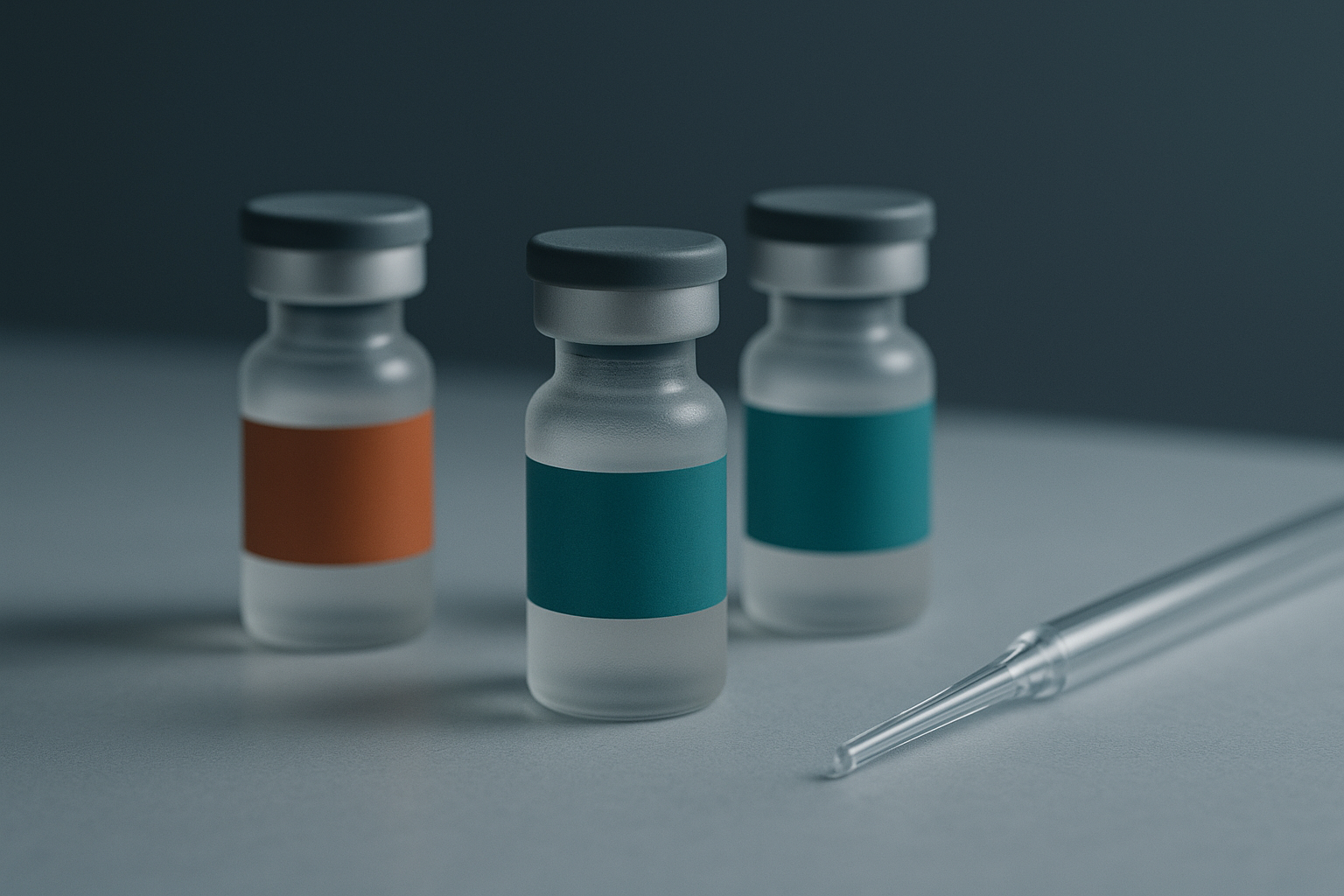
The catalog vial is 5 mg. Standard reconstitution is 2 ml of bacteriostatic water:
| Concentration | 2,500 mcg/ml |
|---|---|
| Typical research dose | 250 mcg |
| Draw volume | 0.10 ml |
| Insulin units (U-100) | 10 IU |
| Doses per vial (at 250 mcg) | 20 |
Published rodent protocols span a wide range (10 µg/kg to 10 mg/kg), so researcher-reference dosing varies. 200–500 mcg daily or twice-daily subcutaneous is the most commonly cited range in the research-peptide community; some protocols split into morning and evening administration.
Run the math for your specific vial and dose target:
Open CalculatorBPC-157 vs TB-500
These two are frequently stacked or compared. They target different mechanisms:
| BPC-157 | TB-500 | |
|---|---|---|
| Size | 15 amino acids (synthetic) | Fragment of Thymosin Beta-4 (~4 kDa) |
| Primary mechanism | Angiogenesis, VEGFR2 | Actin-sequestering, cellular migration |
| Typical research dose | 200–500 mcg daily | 2–2.5 mg 1–2× weekly |
| Half-life | Short (hours) | Long (~days) |
| Best-studied application | GI, tendon | Soft-tissue, cardiac |
See our full TB-500 reference page for dosing and reconstitution of TB-500 on its own.
Safety and side-effect profile
In rodent studies BPC-157 has shown a notably wide therapeutic index with no reported organ toxicity at doses orders of magnitude above typical reference doses. Human case-report data is scarce. Most commonly reported anecdotal effects in research communities are mild GI upset and local injection-site reactions. No controlled human safety trials exist.
Storage and stability
Lyophilized BPC-157 is stable at −20°C for 1–2 years. Reconstituted solution is generally stable for 2–4 weeks at 2–8°C. Do not freeze the reconstituted vial. See our reconstitution walkthrough for technique.
Research Use Only. BPC-157 is not FDA-approved for any indication. Material is supplied by Capital Peptides as a laboratory reagent — not for human consumption, diagnostic, or therapeutic use. Researchers must be 21+.
Key references
- Seiwerth S et al. "BPC 157 and standard angiogenic growth factors." Journal of Physiology — Paris, 1997.
- Chang CH et al. "Pentadecapeptide BPC 157 enhances the growth hormone receptor expression in tendon fibroblasts." Molecules 16(2):1397–1414 (2011).
- Hsieh MJ et al. "BPC 157 accelerates muscle healing by activating the FAK-paxillin pathway." Journal of Applied Physiology (2017).
- Sikiric P et al. "Brain-gut axis and pentadecapeptide BPC 157." Current Neuropharmacology, 2016.